Nocta / AI CPAP Companion
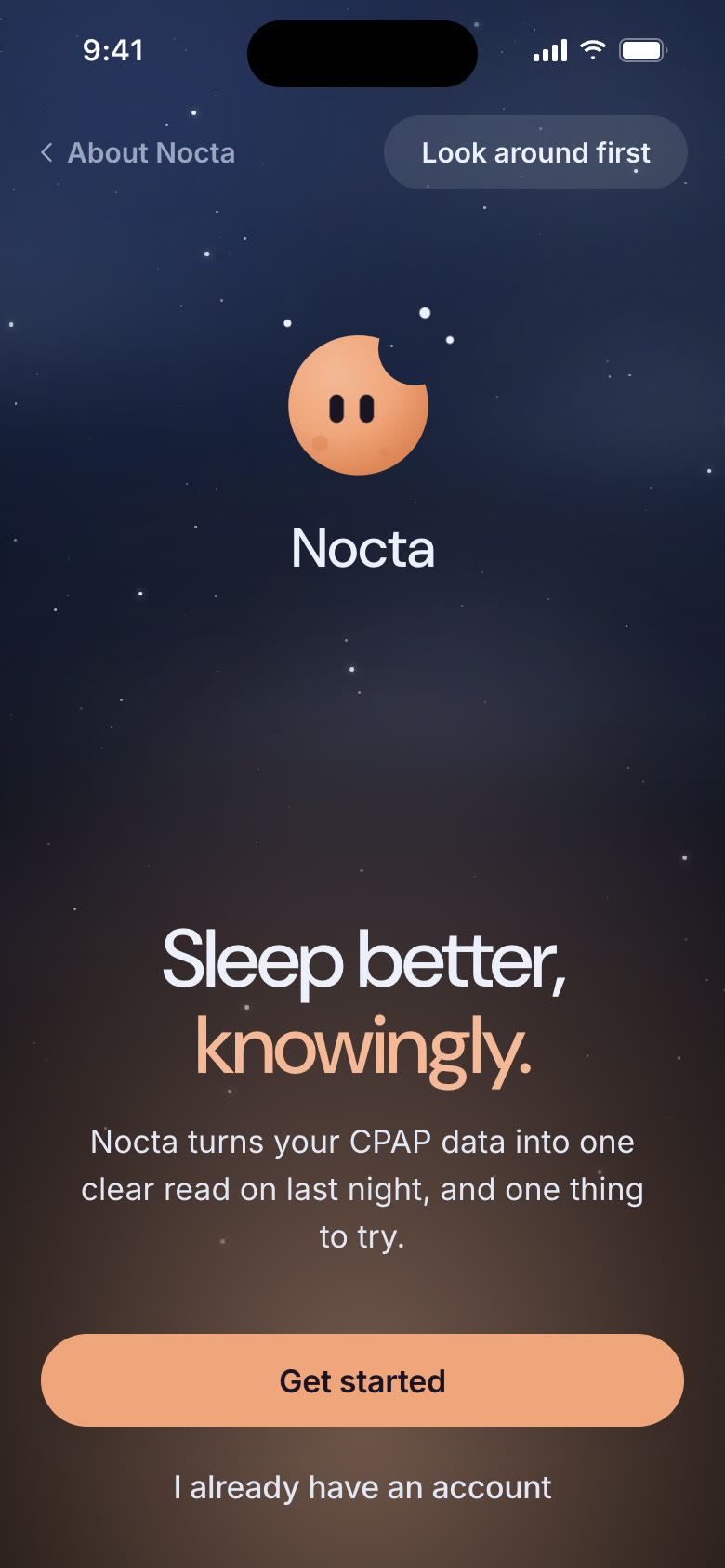
Sleep better,
knowingly.
Nocta reads a CPAP machine's overnight data and writes one honest, plain-language story — what happened, what likely caused it, and the single next thing to try.
01 · The condition
Sleep apnea
Breathing stops and starts through the night, sometimes hundreds of times. Usually the airway collapses (obstructive); less often the brain misses a beat (central).
02 · The treatment
CPAP
A bedside machine pushes steady air through a mask to hold the airway open, and logs every breath to an SD card. Whether the mask fits decides whether people keep wearing it.
03 · The stakes
Compliance
The bar insurers set to keep covering the machine.
01 Desk Research
Whether people stick with CPAP is mostly decided in their first month.
people affected worldwide
adults have moderate - severe sleep apnea
still met the insurer standard (4+ hours on 70% of nights) two years in
of patients on track in their first month were still on track two years later
Community Research
CPAP users online keep asking what their numbers mean.
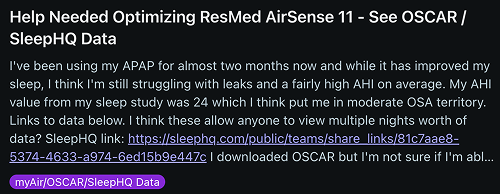
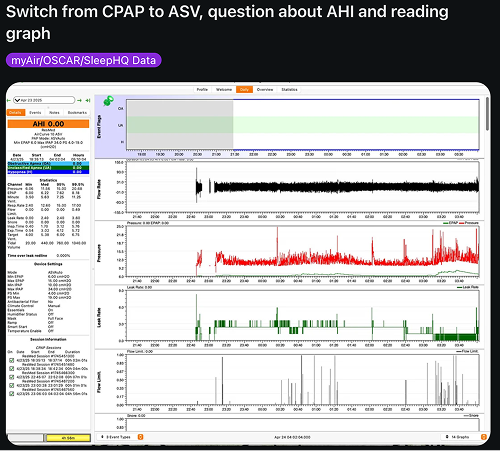
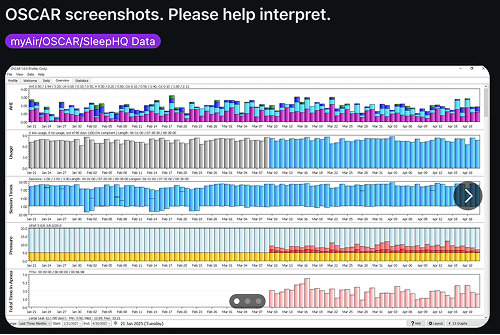
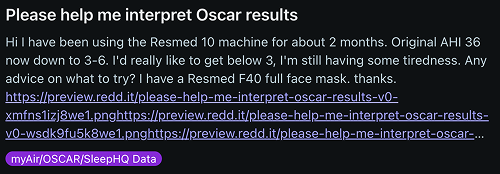
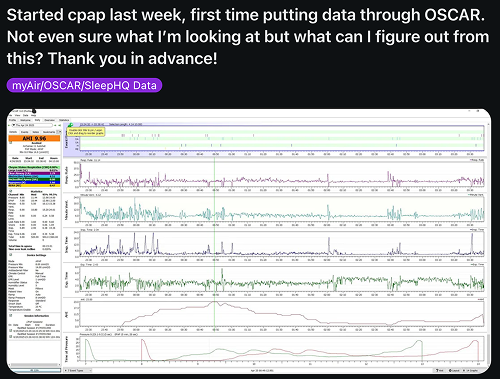
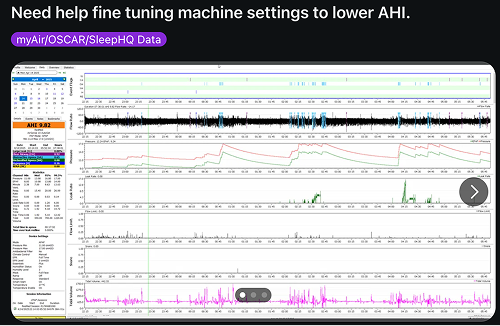
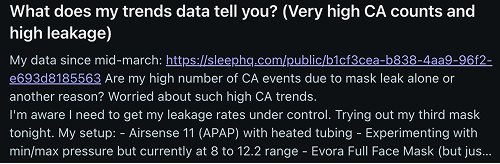
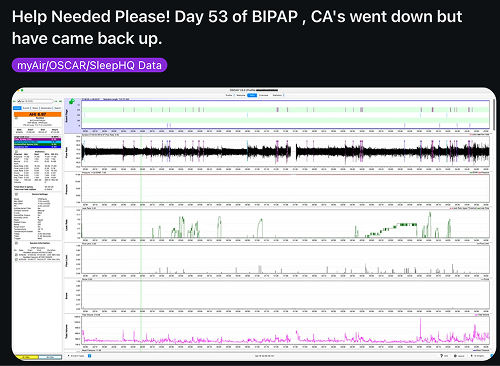
Underneath the frustration, the same quiet hope kept surfacing —

User survey · 14 CPAP users
named mask air leaks as one of their biggest challenges
had already changed their mask style or size
rated mask comfort as the #1 thing they'd change
wanted more guidance and better tracking on therapy
User Interviews
I talked to six CPAP users about what gets in their way.
Kathy L.
Software Engineer · Portland
Wished out loud for a “CPAP virtual assistant” that gives tips for her specific issues.
Cody F.
Veteran & Student
myAir's averaged-out data hides what actually happened overnight.
Susan J.
Self-treating researcher
Self-tunes with OSCAR, Python & ChatGPT — wants longitudinal depth and autonomy.
Miles R.
Product Designer · San Francisco
It shouldn't feel so medical — therapy should feel personal.
Robert T.
Lawyer, 66
A comfortable mask is what makes compliance actually stick.
Marcus B.
Long-haul Trucker · Ohio
I need to know I'm passing compliance — my CDL depends on it.
What I heard, again and again
Mask fit is the real battle
Nearly everyone cycled through many masks (Kathy tried nine) before one stuck — and discomfort is exactly where people quit.
Apps are all-or-nothing
myAir felt too shallow; OSCAR too complex. Everyone wanted the missing middle — real detail, without the overwhelm.
They want a guide, not a dashboard
From “virtual assistant” to ChatGPT consults, users already reach for AI to interpret the data and say what to try next.
It feels clinical — it should feel human
Compliance pressure makes therapy feel like being a medical device. People wanted warmth, autonomy, and encouragement.
02 The Problem
Most people quit CPAP therapy before it can help them.
The problem
CPAP apps either show raw charts or hide everything behind one score. Either way, people can’t tell what went wrong last night or what to change.
What Nocta does
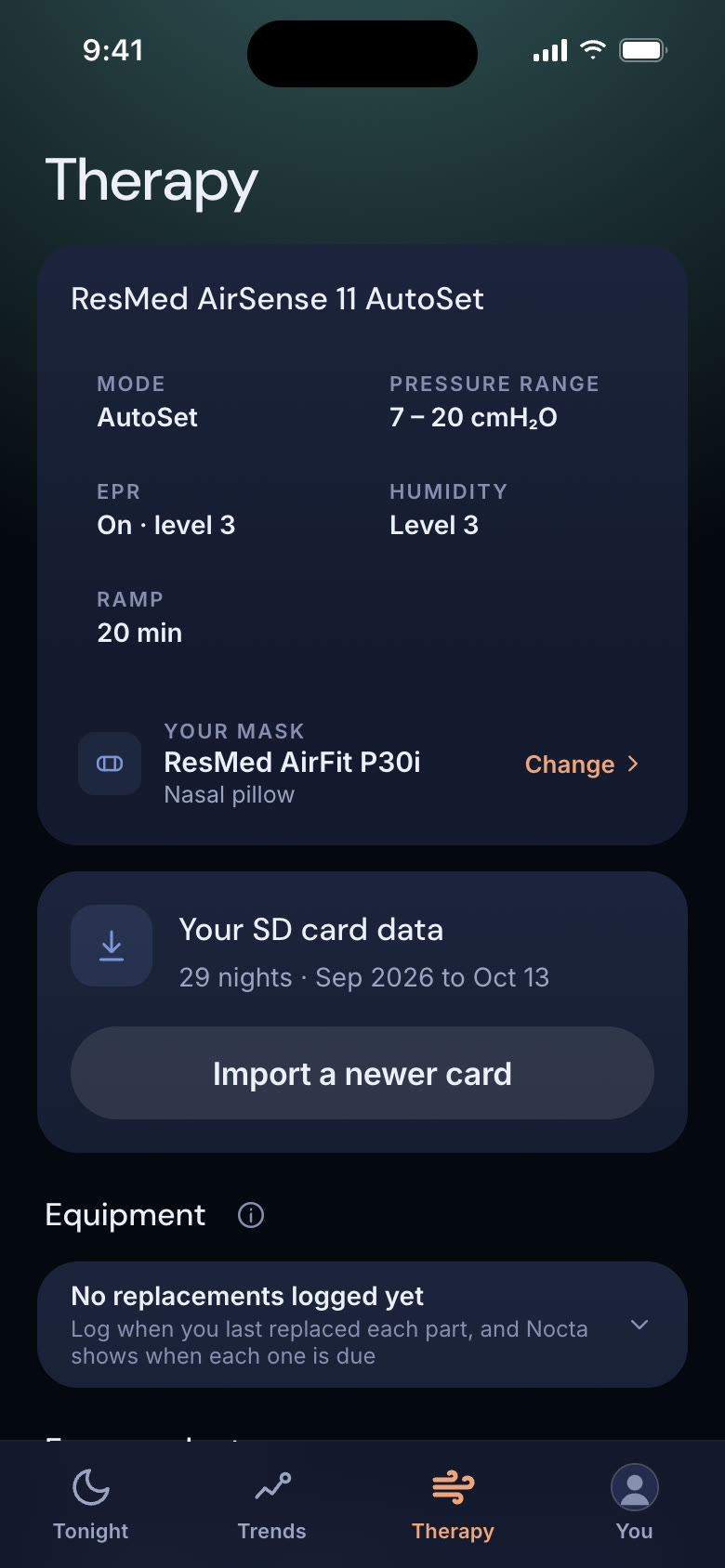
Nocta reads each night from the machine’s SD card and tells you what happened, what likely caused it, and one thing to try tonight.
Competitive Analysis
CPAP apps show the data without explaining it, and sleep apps that explain well ignore CPAP.
Direct · CPAP & sleep-data tools
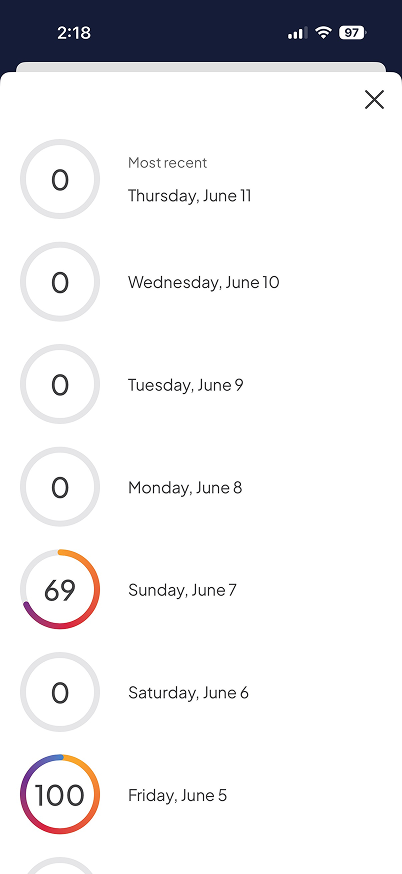
ResMed myAir
The official app — one nightly score, little of the “why”.
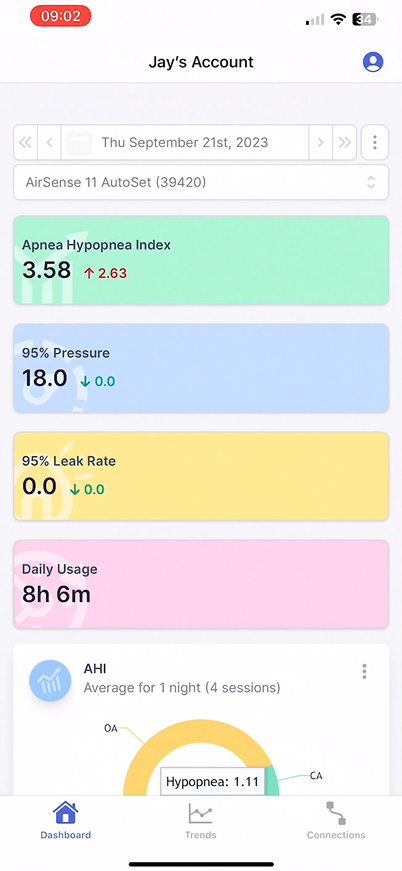
SleepHQ
Deep CPAP analytics — powerful, but built for power users.
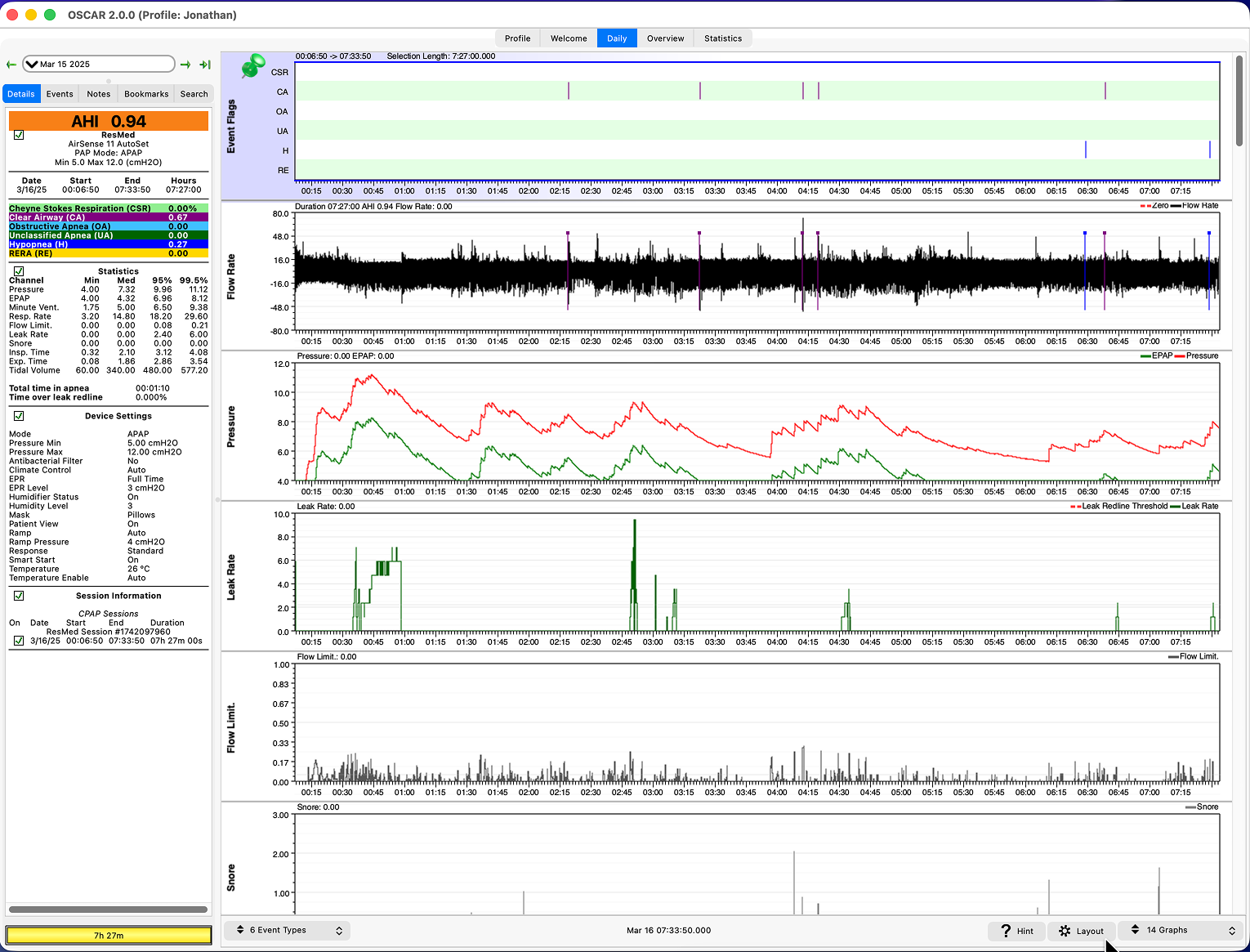
OSCAR
Free desktop software — every data point, zero guidance.
Indirect · Consumer wellness & wearables
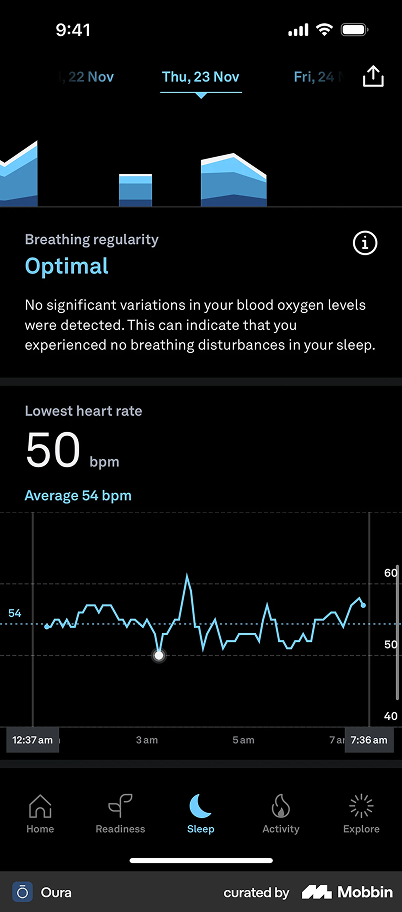
Oura
Beautiful readiness scores — but blind to CPAP.
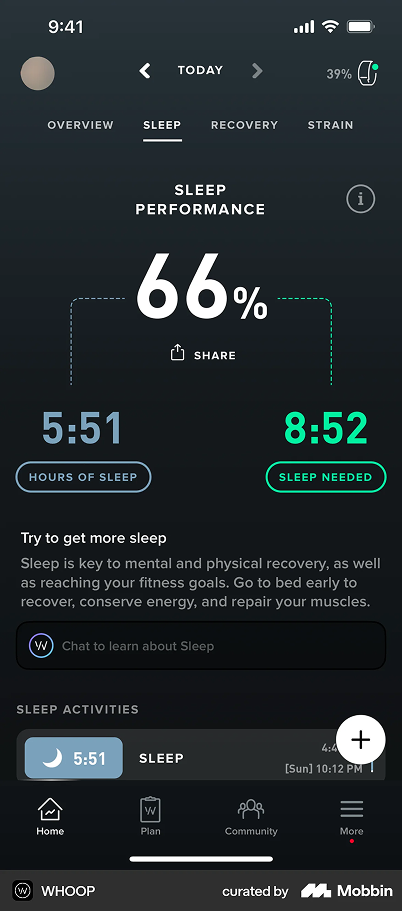
Whoop
Strain & recovery, gorgeously visualized and habit-forming.
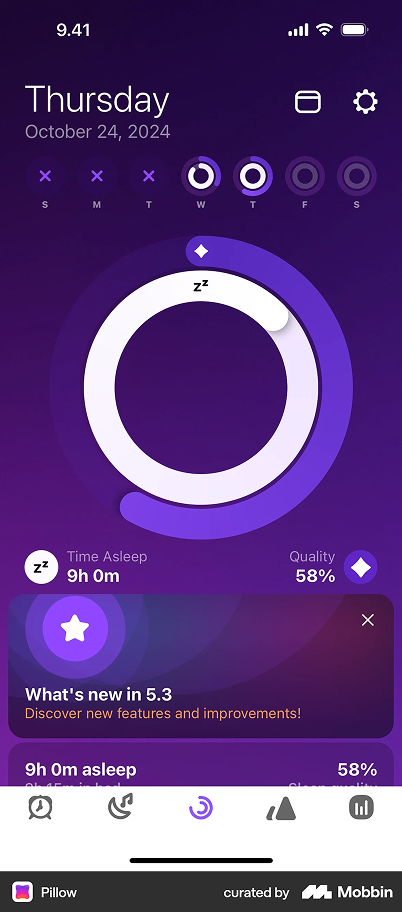
Pillow
Friendly iOS sleep tracking — warm, but light on depth.
Iterations
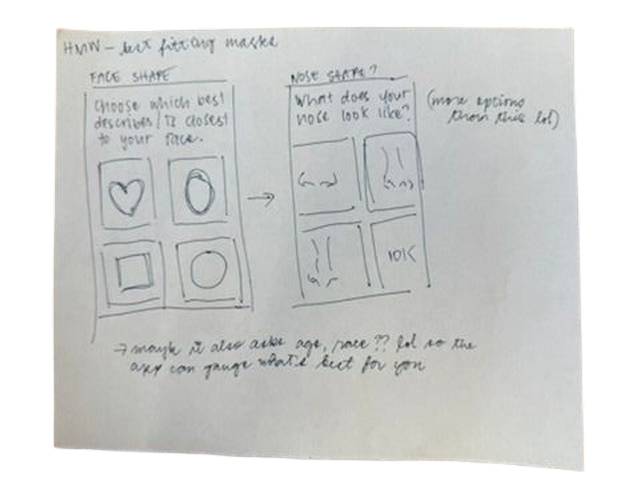
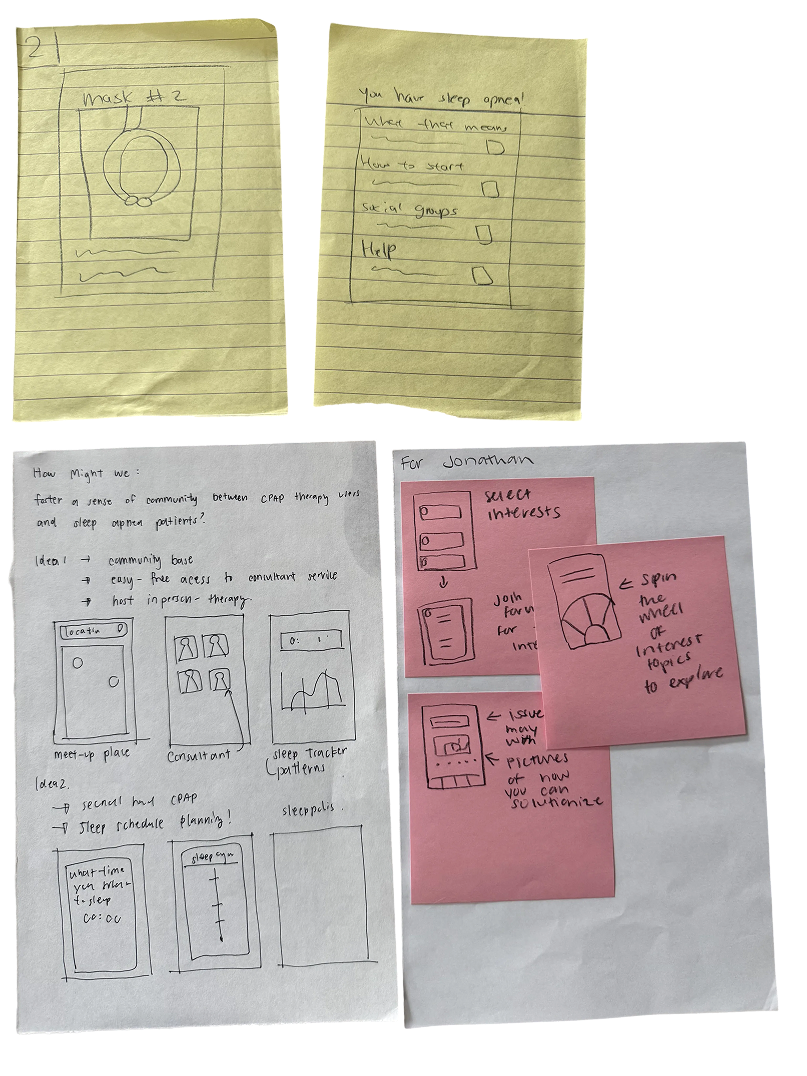
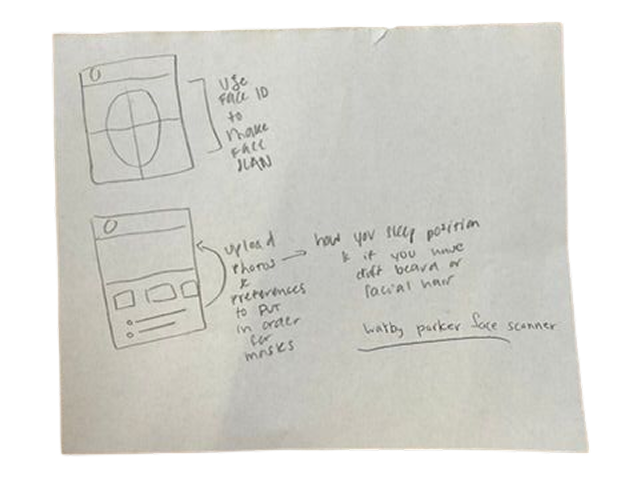
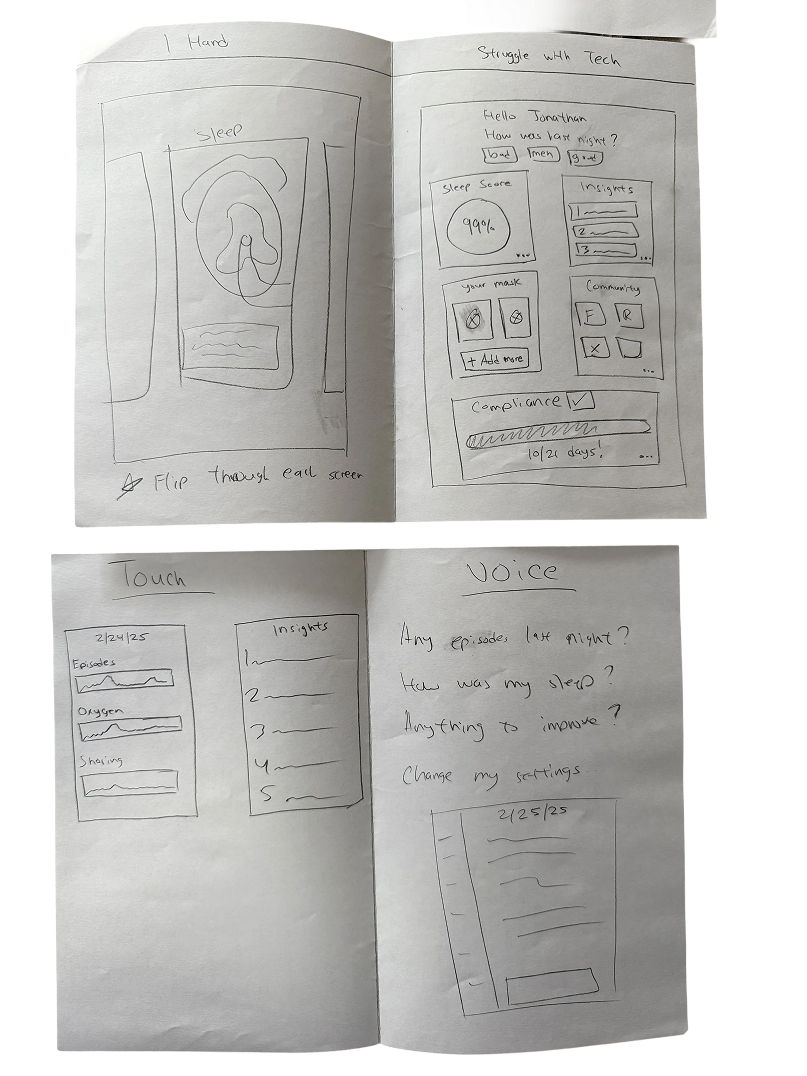
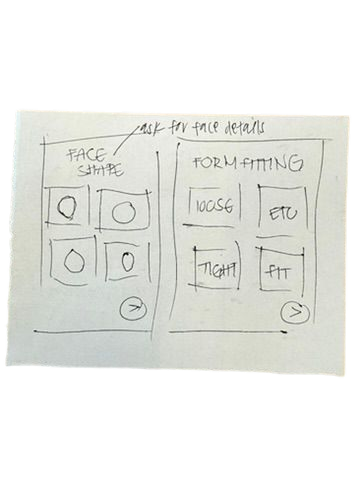
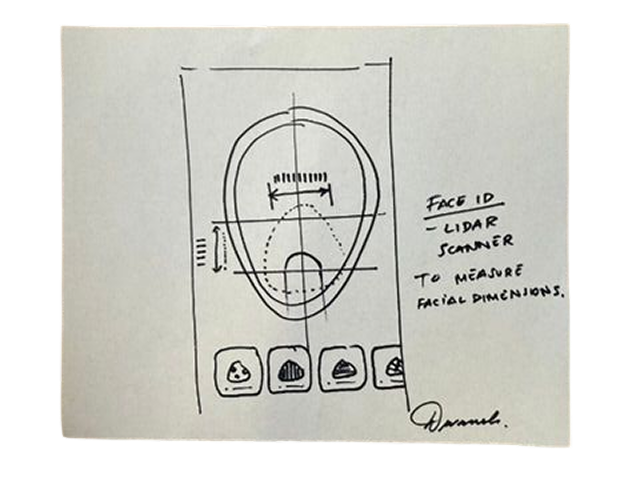
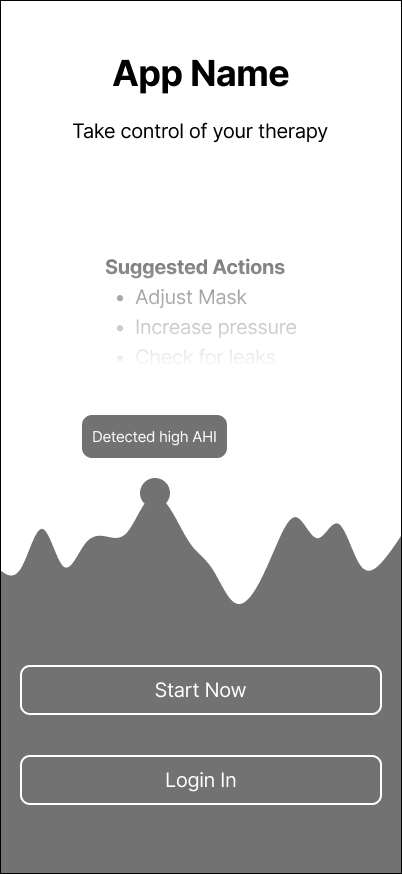
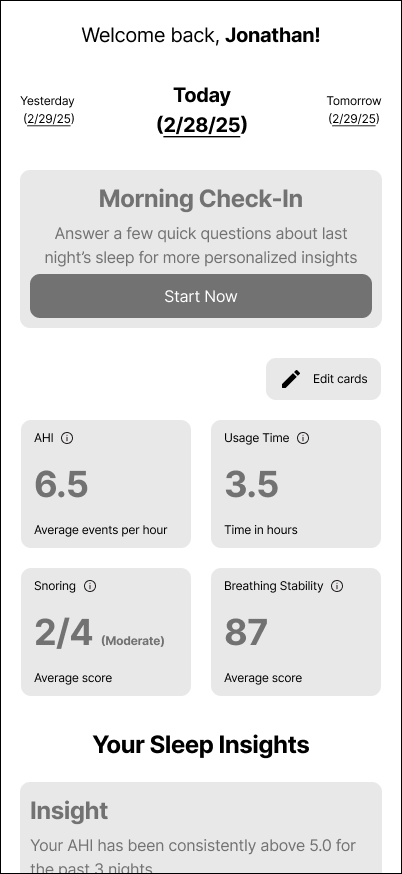
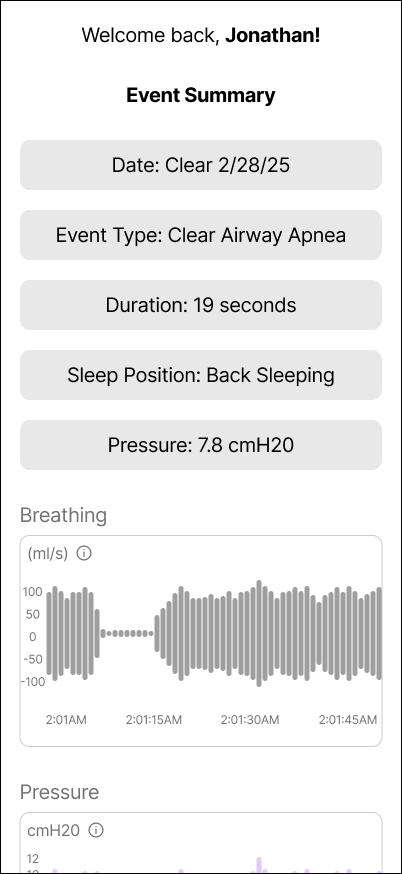
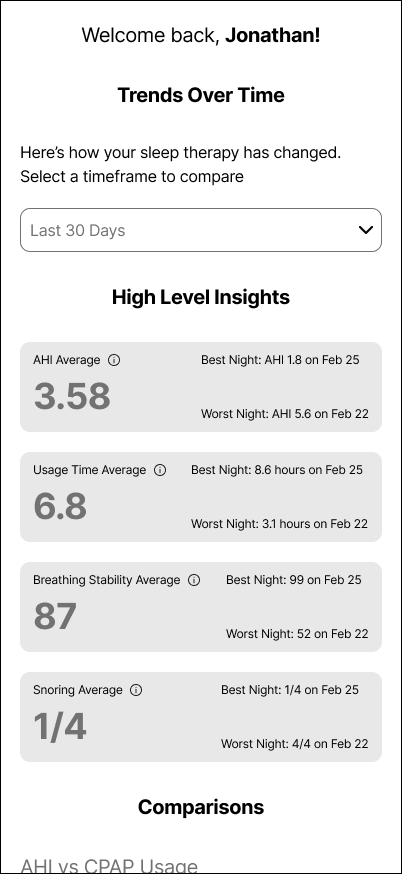
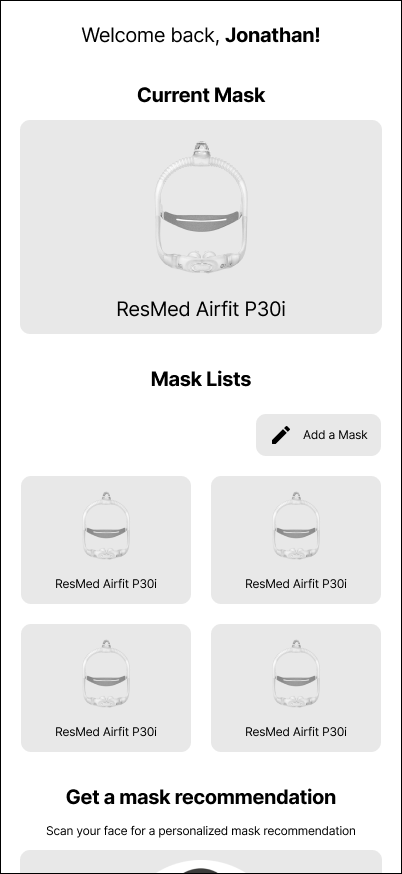
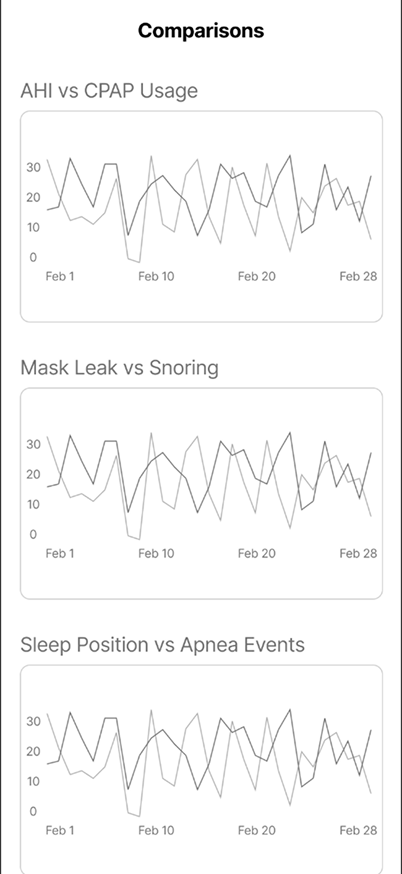
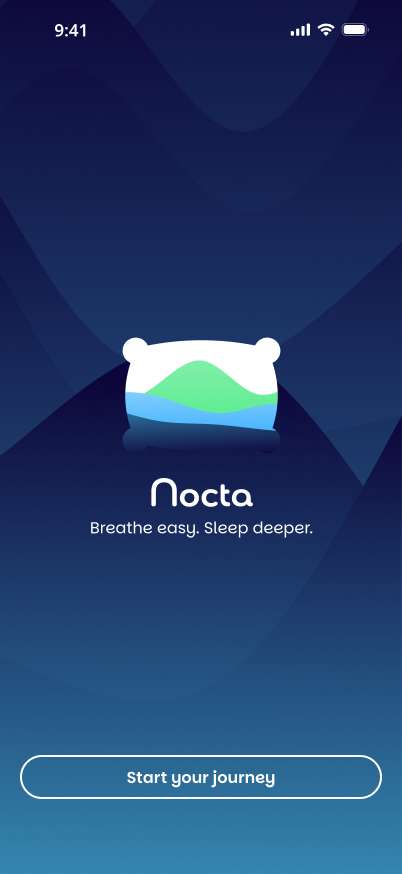
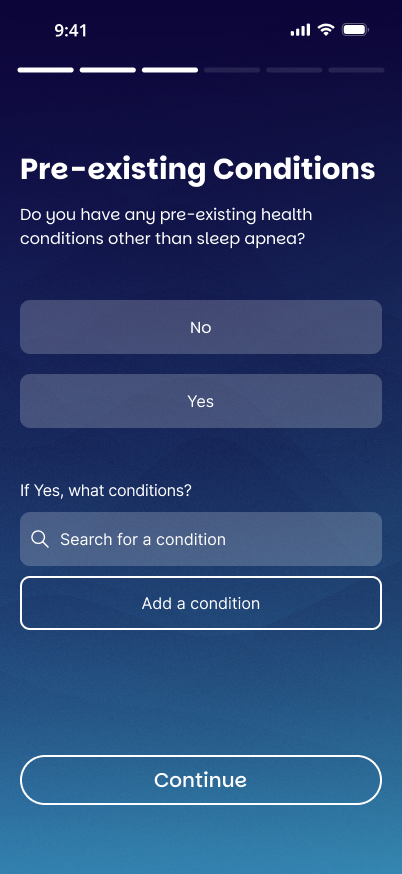
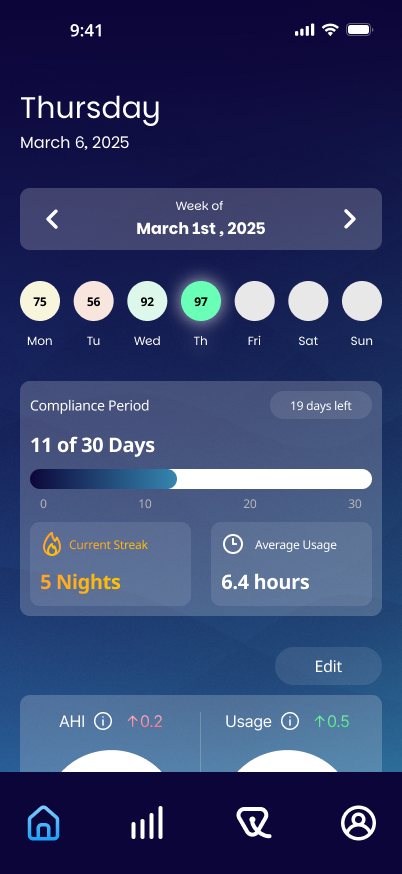
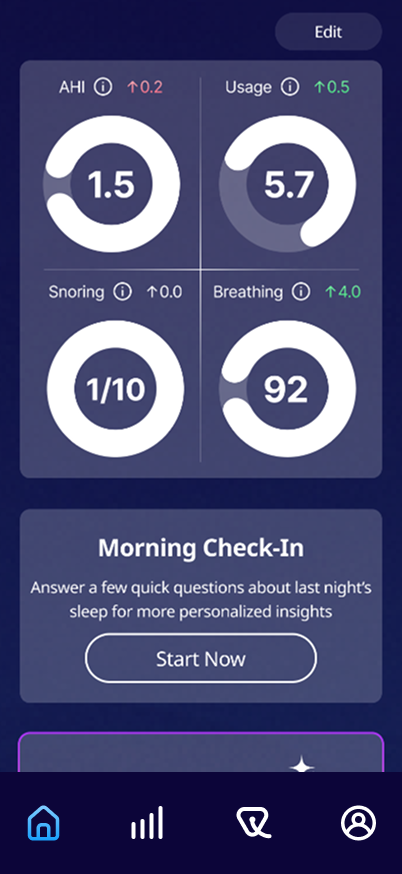
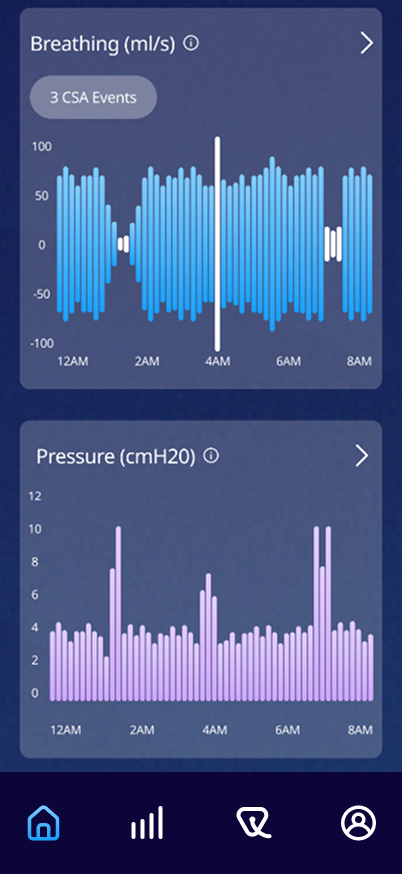
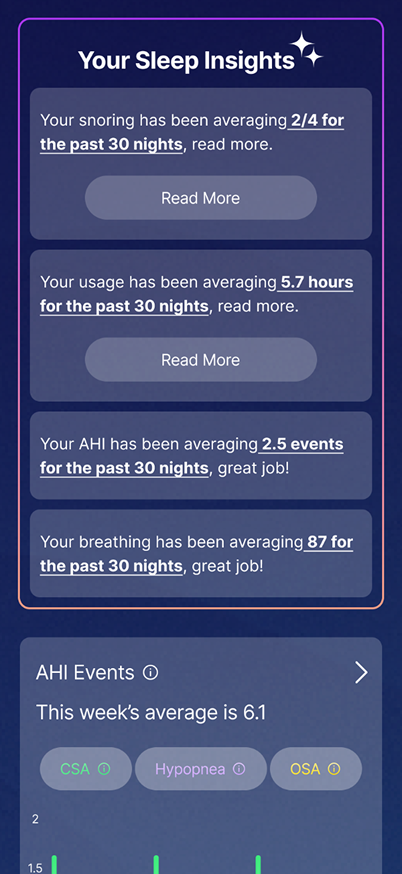
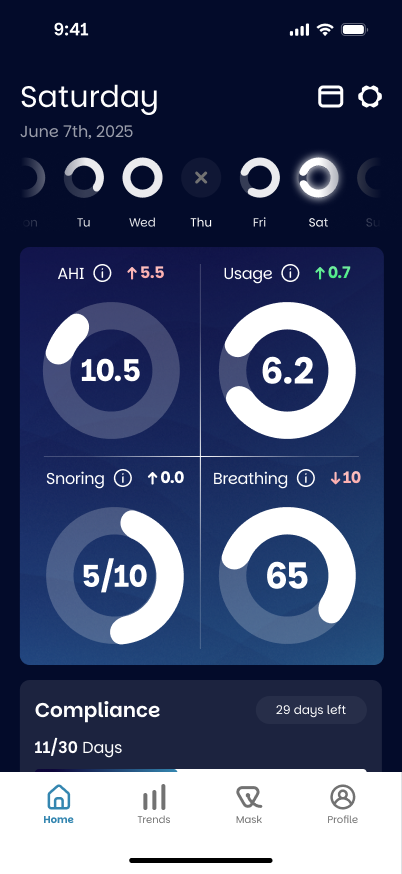
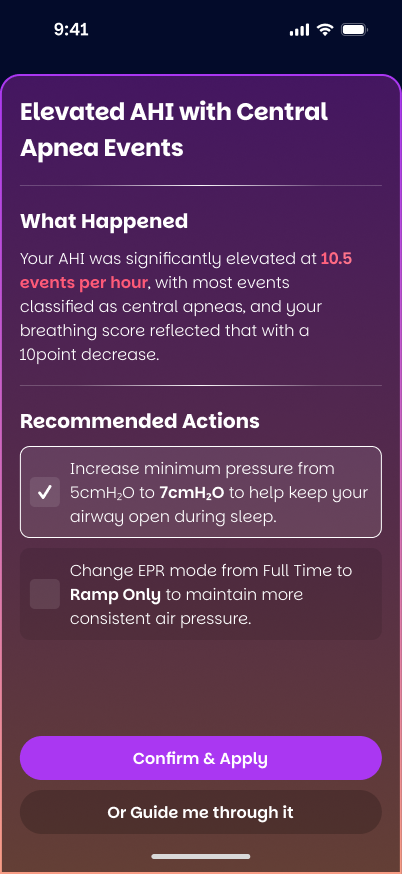
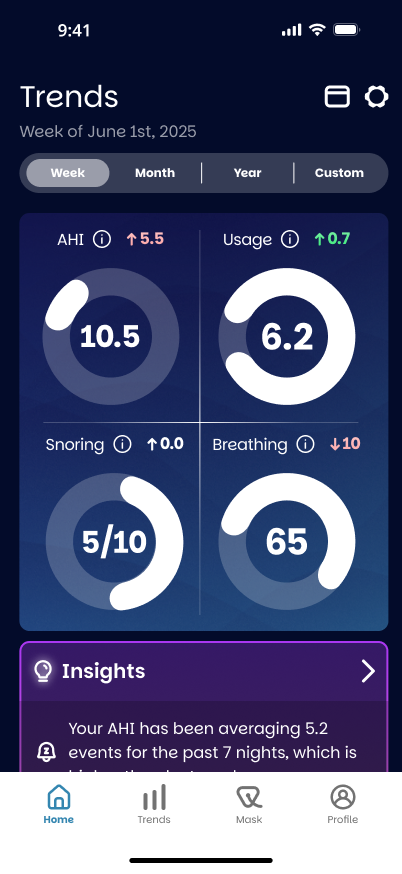
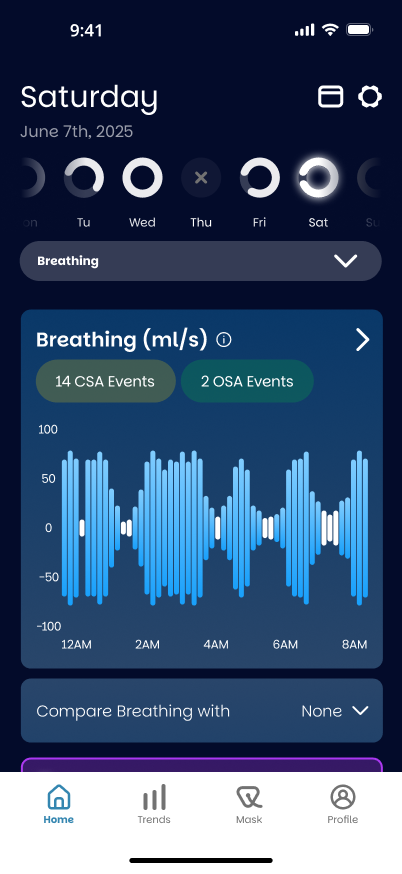
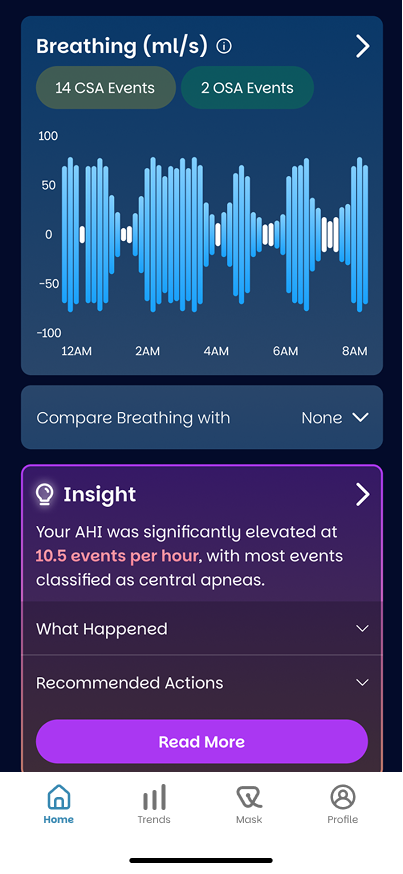
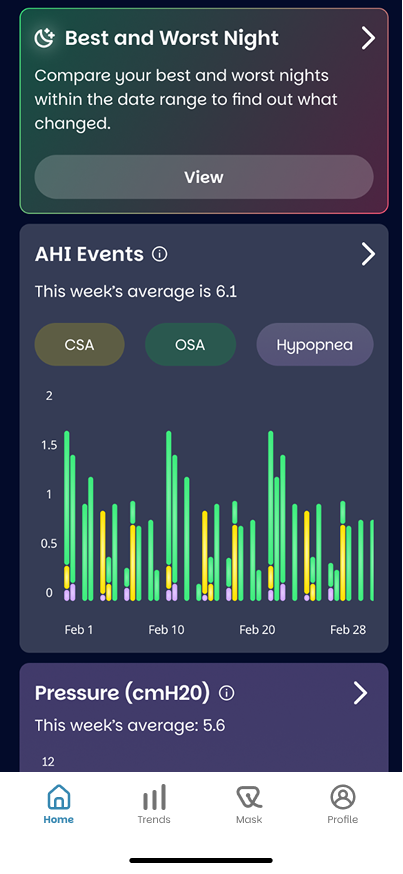
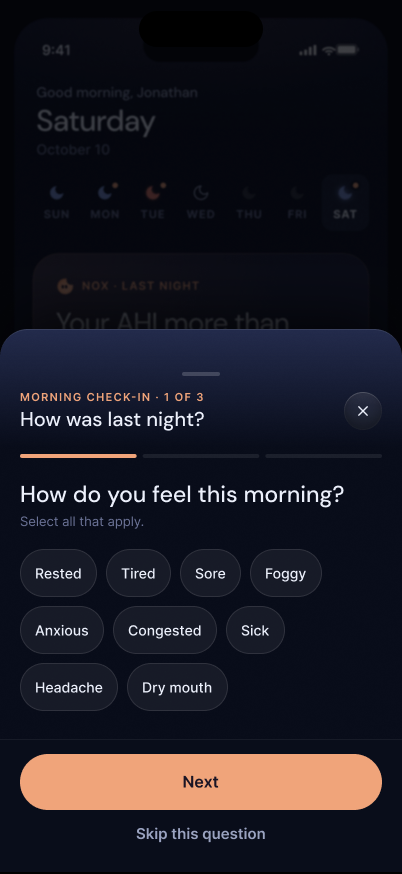
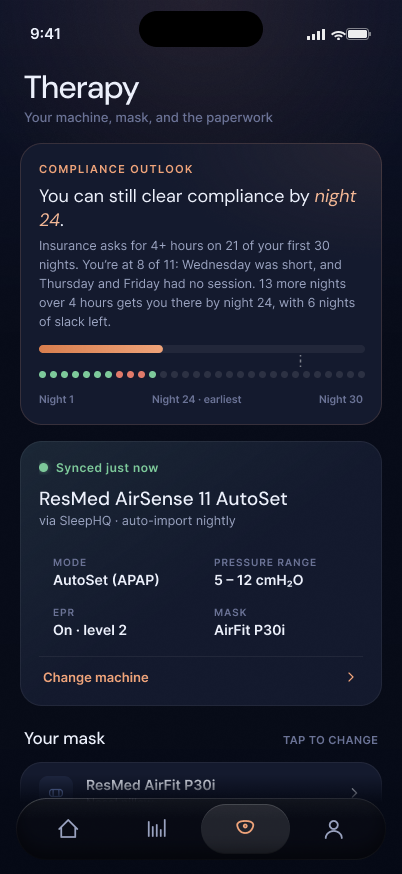
The design went from paper sketches to the final app in five versions.
A 2025 grad-school capstone, designed by hand from paper to high fidelity, then rebuilt in code in 2026.
03 Brand & Design System
Nocta
nox, noctis · Latin for night
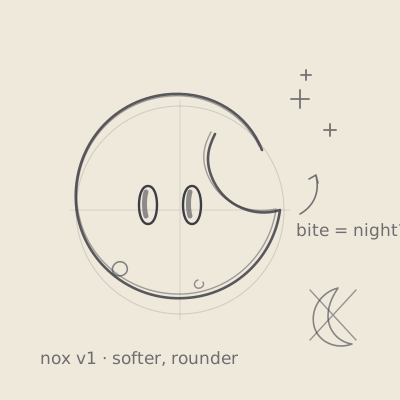
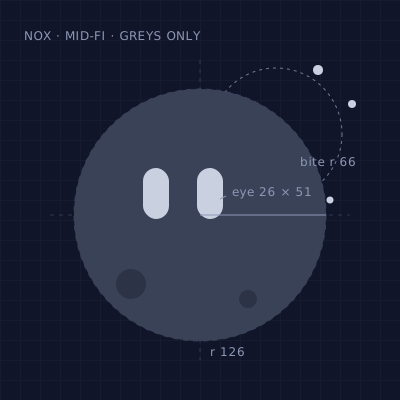

Nox various personalities
Palette
- Night
#090D1A - Surface
#141A2E - Metric
#7B95D8 - Nox
#F0A47A - Attention
#E07A6A
Typeface
04 The Result
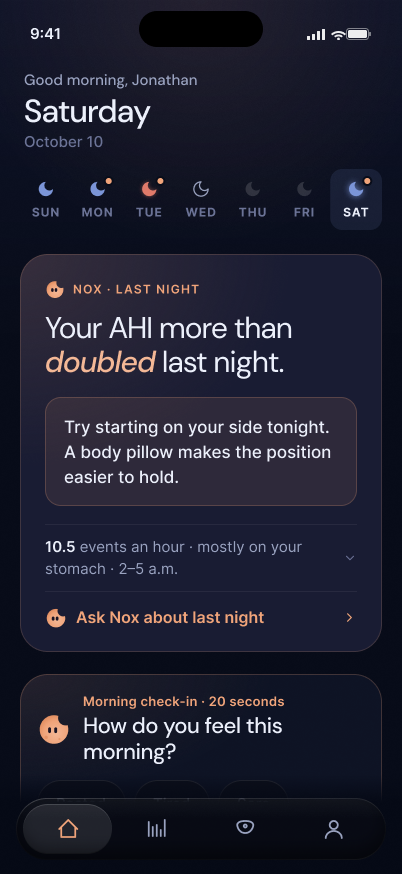
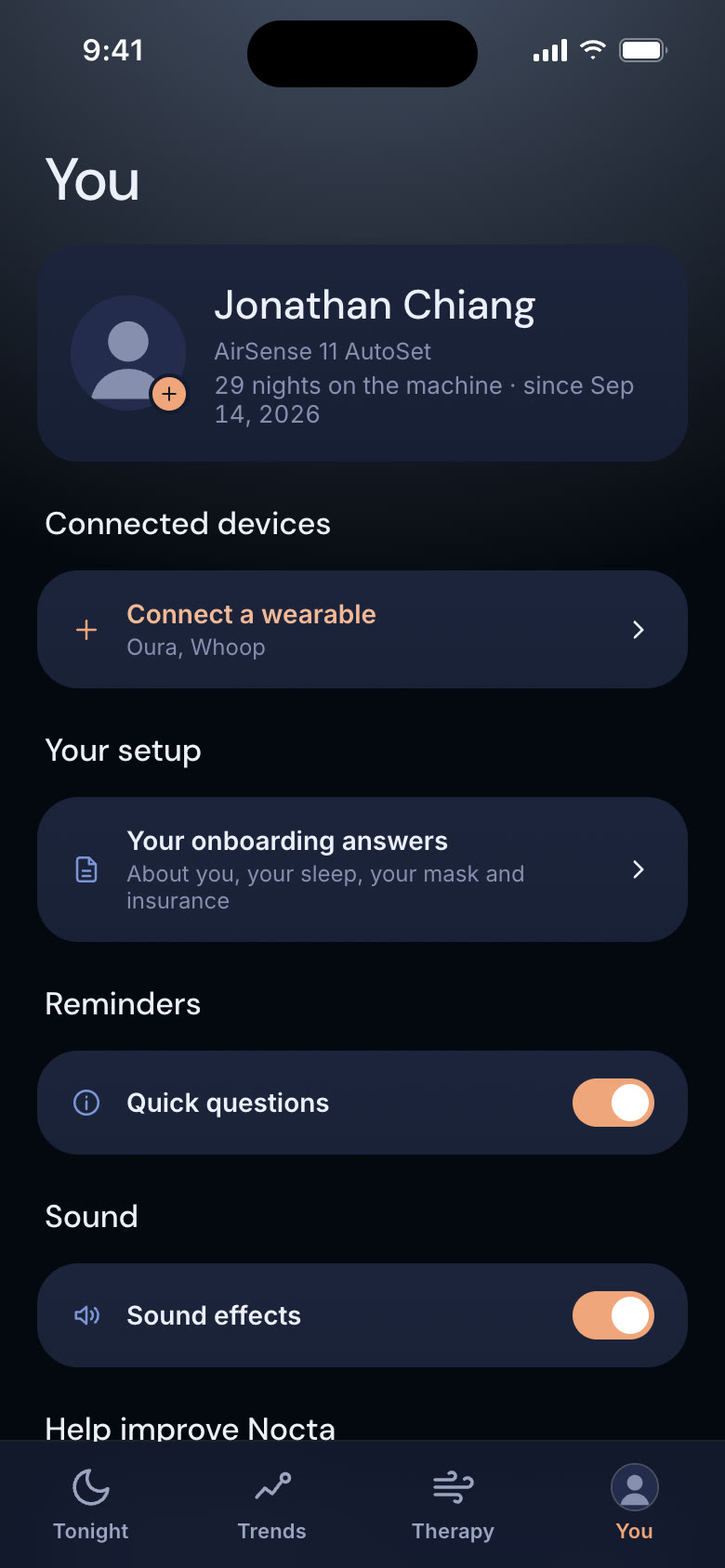
Here’s what Nocta looks like today.
01
The why horizon
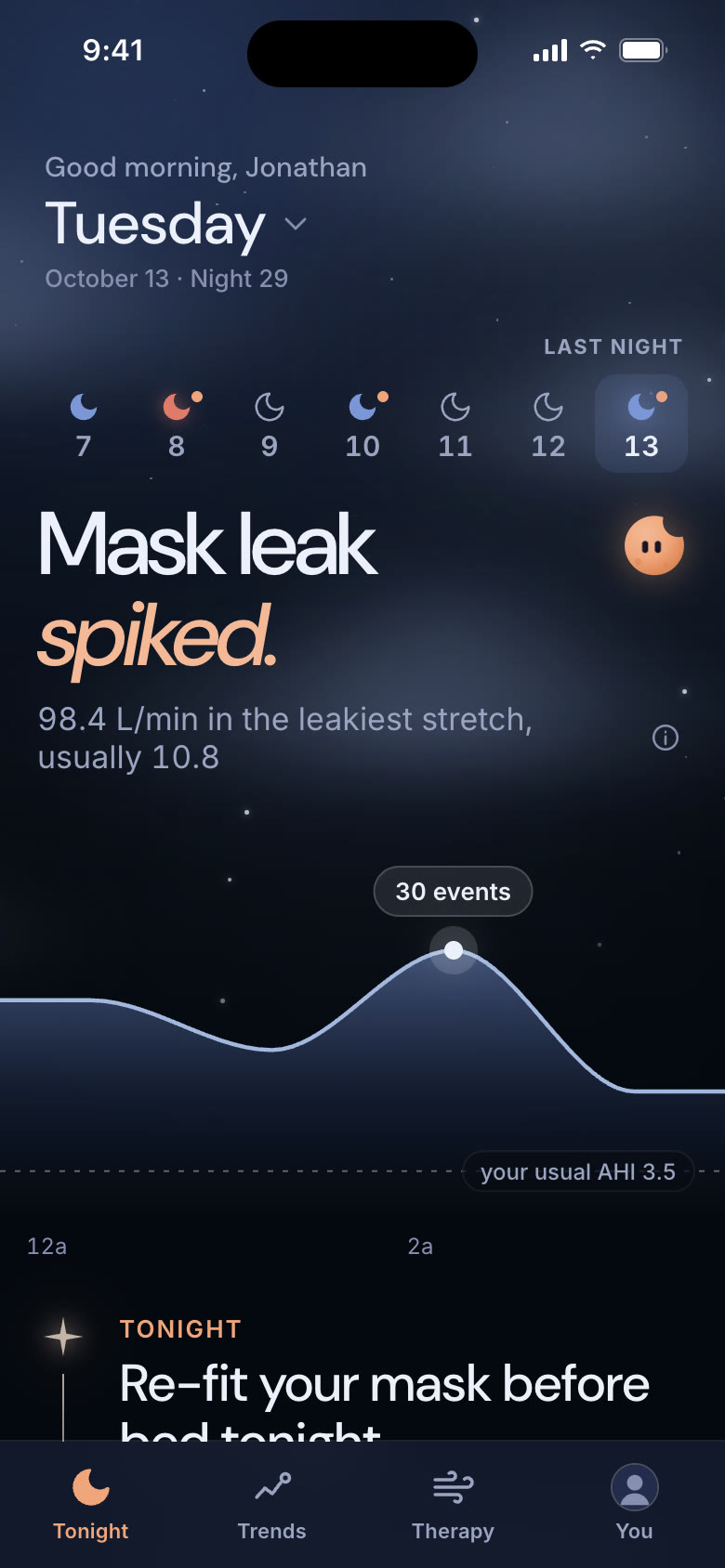
Instead of a wall of charts, the first thing you see is a verdict and the shape of your night: a few words on what happened, one line with a reference point, and a curve of events per hour against your usual.
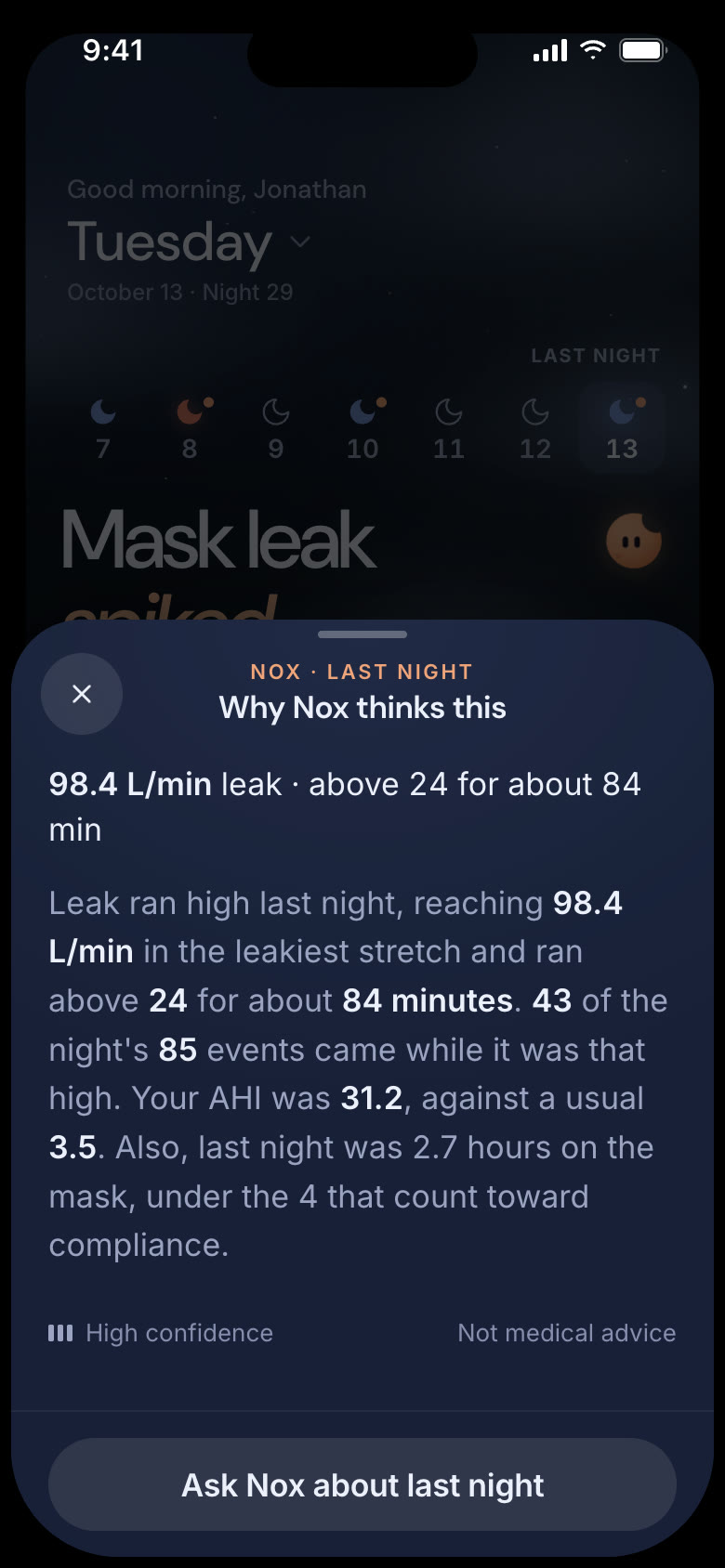
Tap the info icon and Nox shows its work: the exact numbers it reasoned from, whether the night fits a pattern it's watching, and how confident it is.
02
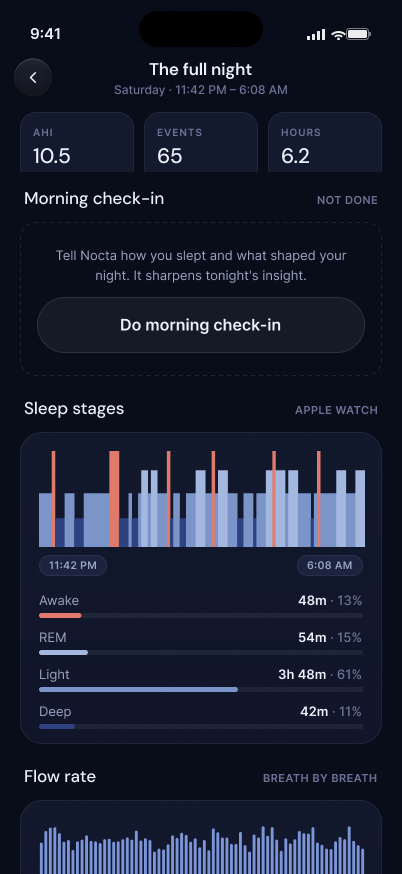
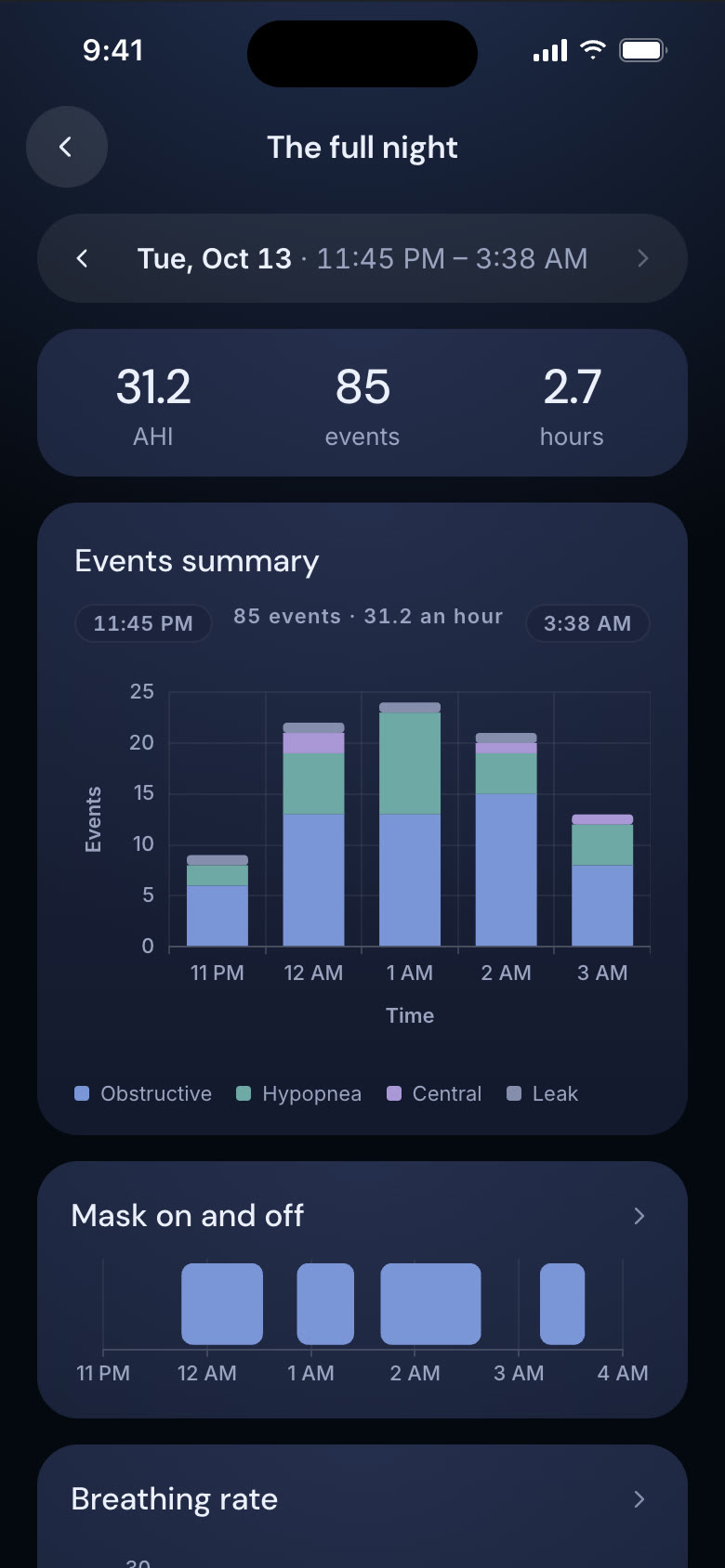
The full night, one chart at a time
The detail layer: events by type on the night's real clock, then every signal the machine records, from breathing rate and pressure to leak, flow limitation and snore.
Tap any chart for its own page, like Apple Health: the key number, the graph at full size, and a plain-language “About.”
03
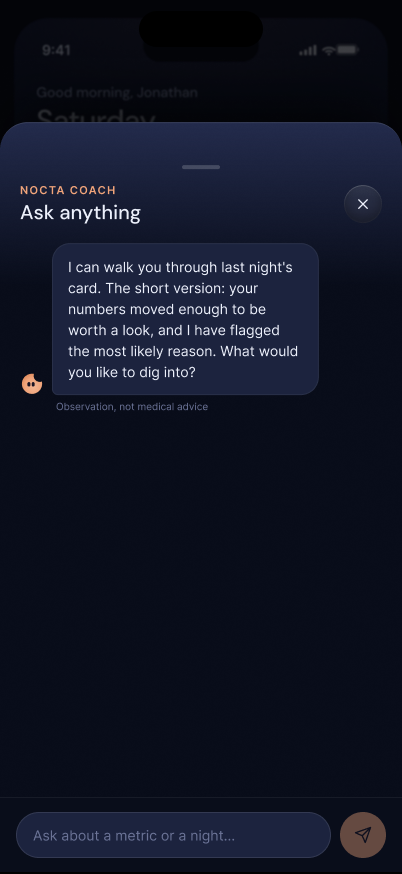
Ask Nox
Nox opens already knowing what you were looking at. From the horizon it starts with last night's numbers and offers three follow-ups; from Trends or a chart, it starts there instead.
Its limits are part of the design. Ask it to change your pressure and it says that's your doctor's call, then offers to prepare a summary for them.
04
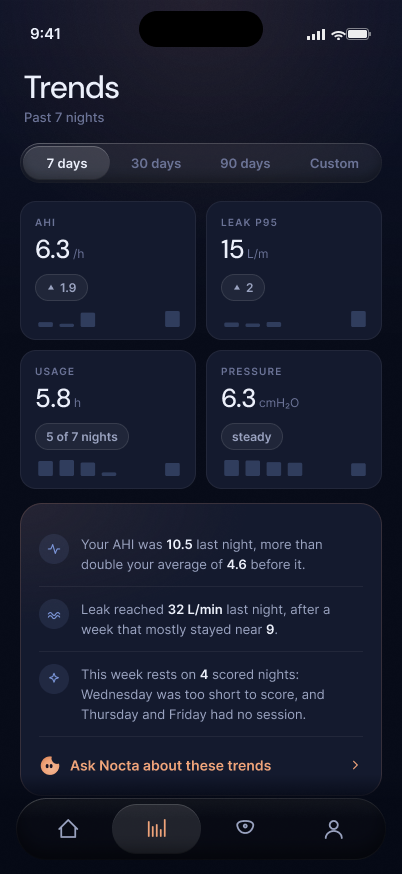
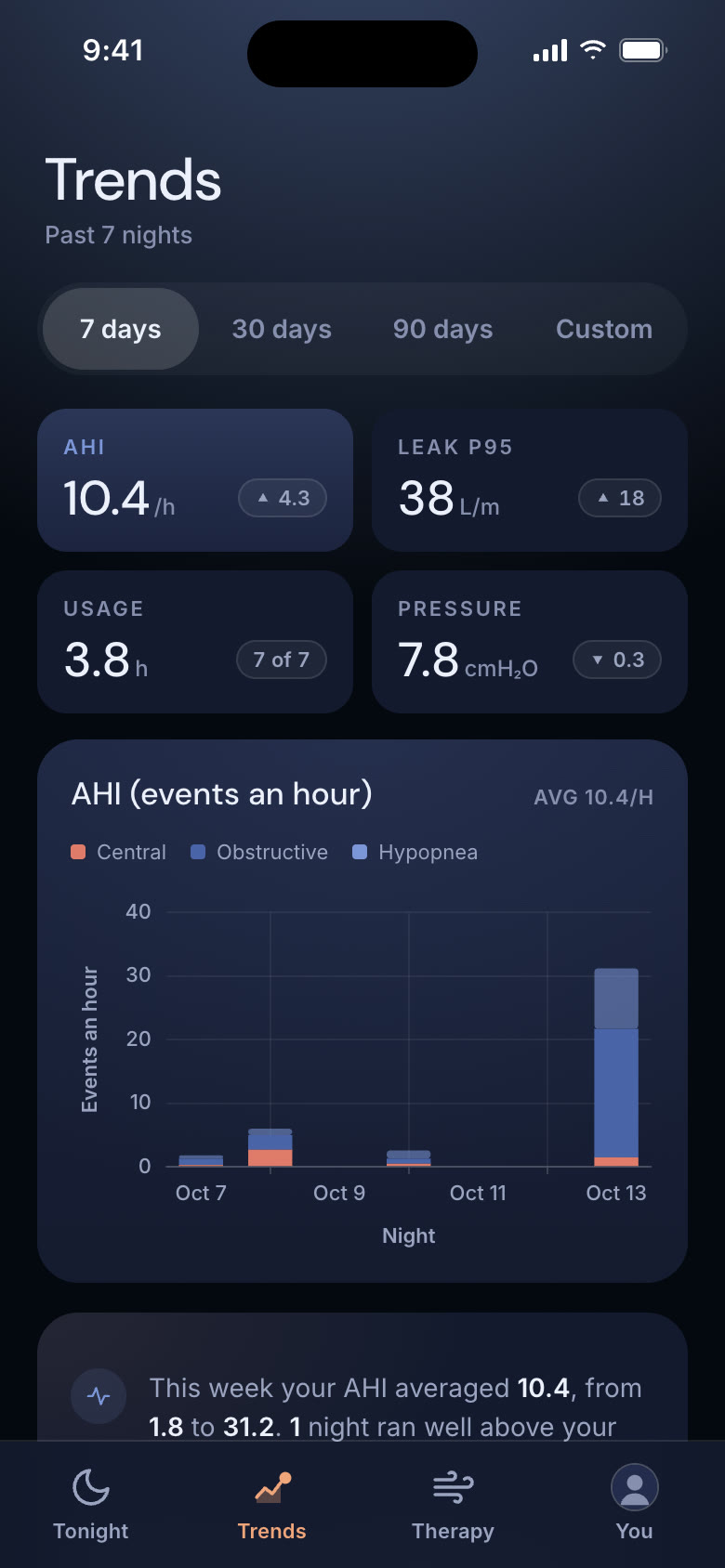
Trends over time
Zoom out to 7, 30 or 90 nights. Four tiles (AHI, leak, usage and pressure) double as tabs for one large chart, each with its change right beside the number.
Week-level insights, a best-versus-worst night comparison and journal patterns connect what you logged to how you slept.
05 How Insights Are Made
How Nocta decides what to suggest each morning.
insights.js · simplified
function morningCard(date) { const night = cardNight(date);Last night’s data, read from your SD card.
const ctx = { usual: baselineFor(date),Your normal: the middle of your last 30 nights.
setup: getAnswers(),Your mask type and sleep position, from setup.
checkin: checkinTags(date),This morning’s check-in answers.
quiet: quietKinds(date),How it learns: rules you said were wrong rest for 2 weeks.
}; const found = DETECTORS
.map((rule) => rule(night, ctx))21 rules, each looking for one thing, like a leak.
.filter((f) => f && !isQuiet(ctx, f.kind))Skips those rules, unless it’s something for your doctor.
.sort((a, b) => b.priority - a.priority);The most important finding goes first.
return write(found[0], ctx);}What it writes on Tonight
Your mask leaked more than usual last night.
98.4 L/min in the leakiest stretch, usually 10.8
06 Beta Findings
Testers worried about who could read their health data, so I locked it down.
About 175 people tried the beta and 24 imported their own SD card. Within five days of their feedback, every place Nocta keeps their data was encrypted.
Your computer
Reads the SD card in your browser
Nocta’s server
Locks each night with AES-256
Storage
Keeps only locked copies
Oura and Whoop keys are encrypted and never reach the browser.
Research copies have no name attached and are encrypted at rest.
Passwords need upper, lower, a number and a symbol.
A written breach plan, with keys that can be swapped safely.
07 What I Learned
What I learned from shipping Nocta to real users.
The safest AI is predictable
Rules can be read, tested and published. That mattered more than fluent prose.
Real data breaks the happy path
A real card brought 20-minute nights and nights in pieces. Each one needed a calm state.
Voice is a system too
Hedged causes, one action, no diagnosis: enforced in every screen and every Nox answer.
Privacy is part of the design
Session replays mask every number and chart, and shared nights are anonymised.
Try Nocta
Live in beta. Bring your own SD card, or look around with a sample month first.